Ireland launched the Basic Income for Artists (BIA) pilot in 2022, designed to support 2,000 artists and creative workers with a guaranteed income of €325 per week. The BIA pilot aims to address long-standing issues of precarity of income and sectoral retention in the arts, while investigating, the impact of a direct unconditional support, on artists and the creative landscape.
The Department of Culture, Communications and Sport have published three reports in 2025 focusing on the BIA pilot.
First to be published, was a report by Dr. Jenny Dagg; this qualitative report explores the impact of receiving a basic income for artists and creative arts workers in Ireland.
The second report to be released this year on the BIA pilot was a two-year impact report; this two-year impact report reveals a clearer picture of how the BIA pilot has been working in practice. The findings are overwhelmingly positive for recipients; increased time to devote to artmaking, greater financial investment in creative practice, improved overall personal wellbeing
And the third and most recently released report, was a Cost Benefit Analysis of the BIA pilot; this report identifies strong evidence that the BIA pilot is delivering value back to society. With the report identifying that for every €1 of public money invested in the pilot, society received €1.39 in return. The report also shows the net cost of the BIA pilot went from €105m to under €72m due to tax generated and savings on social welfare payments.
Creative time, giving the gift of hours
One of the clearest benefits of the BIA pilot has been the extra time artists are able to dedicate to their craft and practice. The two-year impact report shows BIA recipients spend over 11 more hours per week on their creative practice compared to the control group. Of those:
- 5.3 hours of that is dedicated to making work.
- 2.9 hours goes into research and experimentation.
- The rest of this extra time is spread across admin, networking, and other artistic practice related activities.
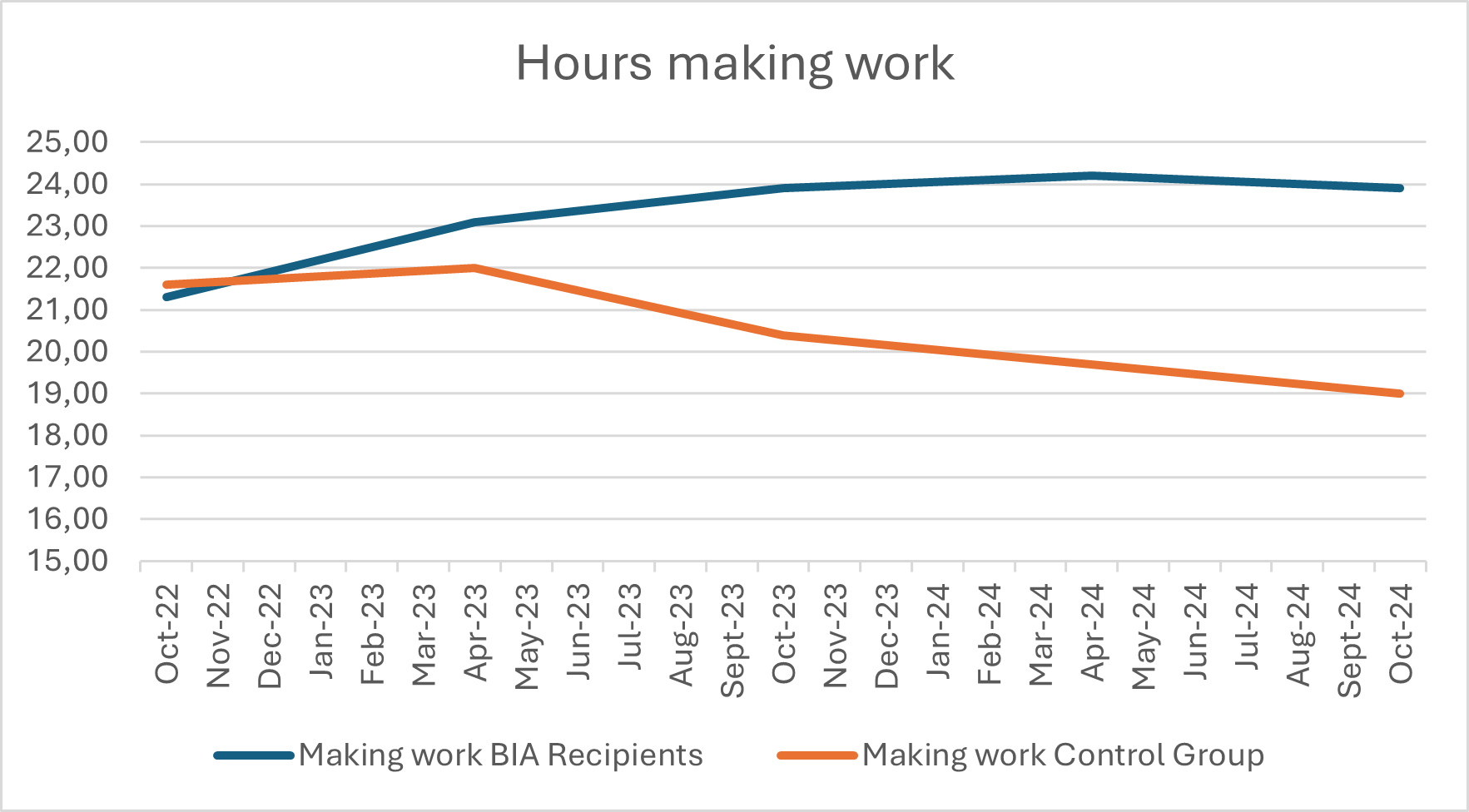
Figure 1 Hours making work
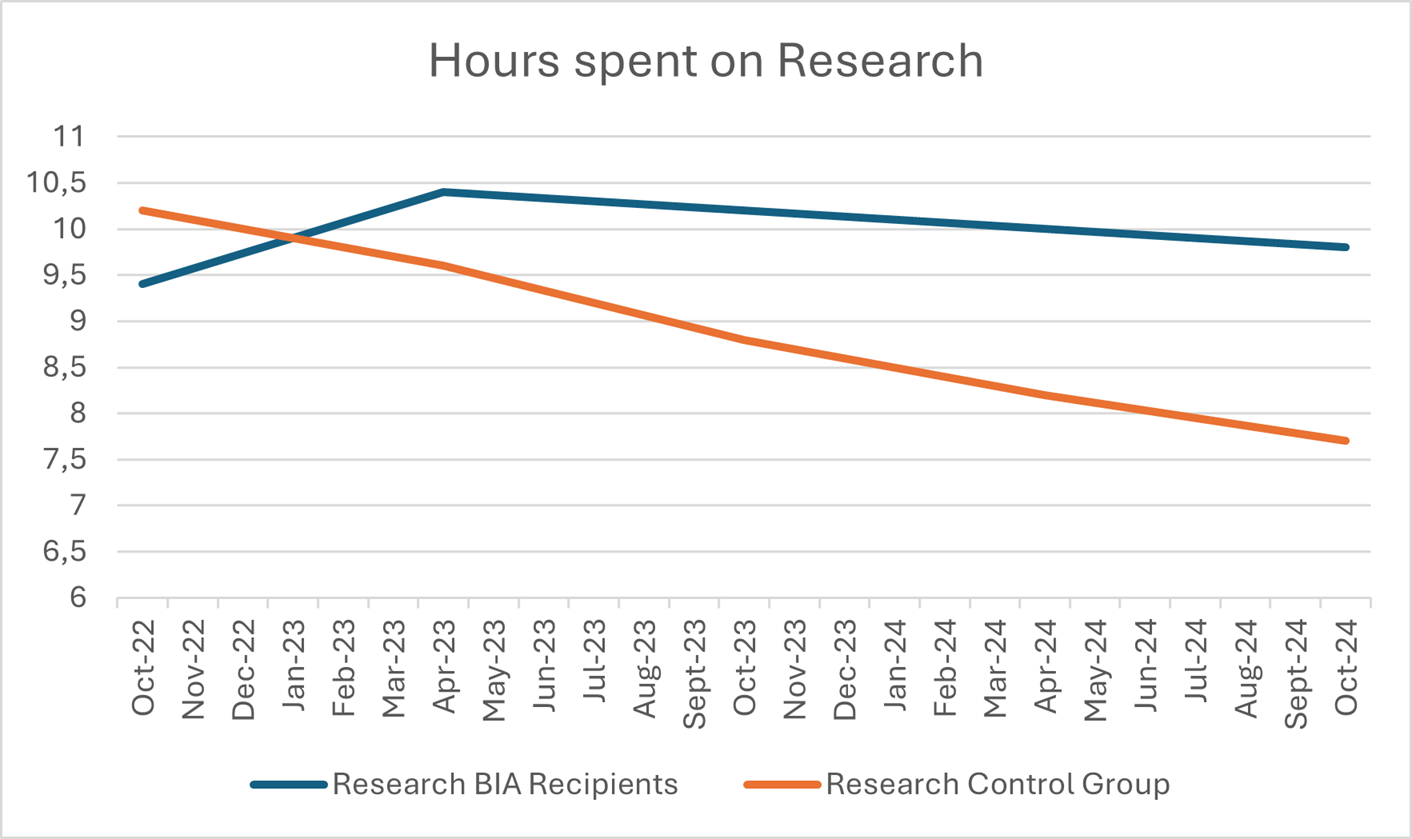
Figure 2 Hours spent on Research
Time is not just money, it is the raw material of creativity. With reduced precarity the pressure of needing to earn income from non-arts related jobs and sectors is reduced; recipient artists can immerse themselves more fully in the process of creating, exploring, and innovating.
Investment in Creativity
The increased financial breathing space for recipients does not just increase available time, it also enables recipients to increase investment in their artistic practices. Recipients report spending around €250 more per month on average than the control group members, on materials, equipment, workspace, and travel.

Figure 3 BIA Pilot Practice Expenditure (Equipment/Materials)
This marked transformation, where BIA recipients can afford better tools, studios and opportunities that raise the quality and scope of their work. The BIA pilot is not simply supporting artists and creativity; it is actively fuelling growth.
Sectoral retention, staying in the arts
Another powerful outcome of the BIA pilot is sectoral retention. In the control group, the percentage of artists who had not worked in the arts in the previous six months rose from around six percent in 2022 to over thirteen percent in 2025. Among BIA recipients, that figure hovered steadily at around four to five percent.
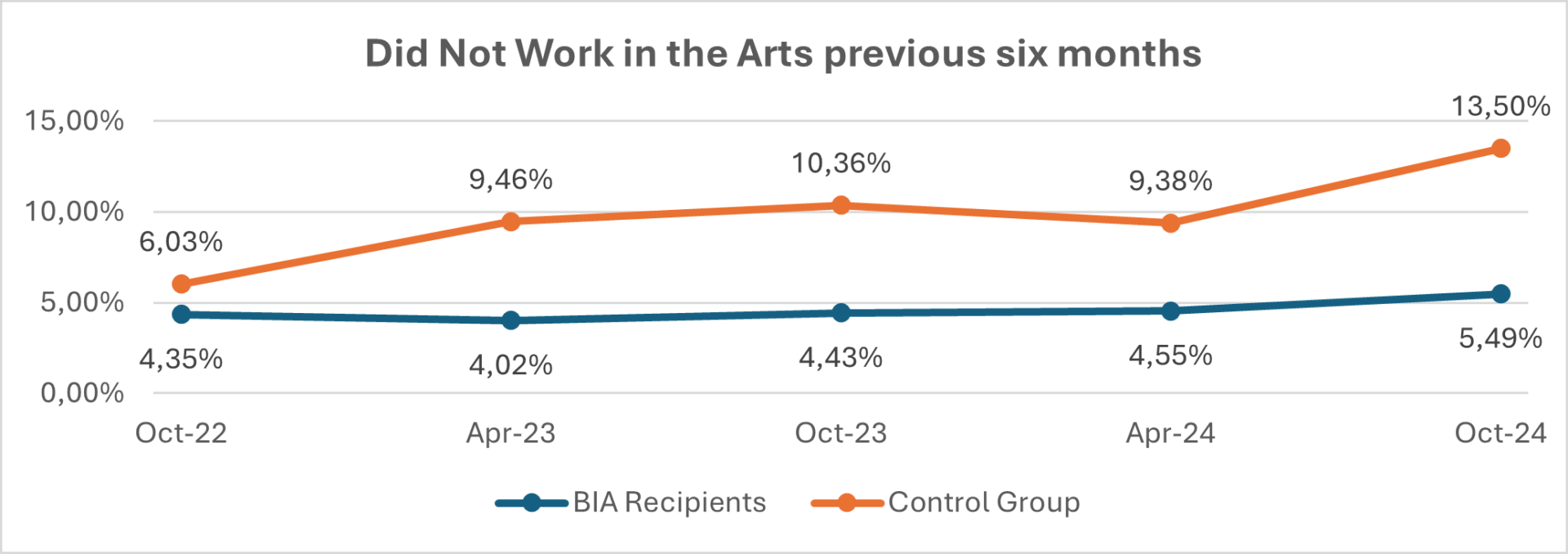
Figure 4 Did Not Work in the Arts previous six months
The implication of this is clear; the BIA pilot is keeping artists in the sector, who might otherwise have left through financial necessity.
Wellbeing and Mental Health
The increased financial security of BIA recipients, has knock-on effects beyond art-making. The research over the two-year period shows striking improvements in mental health and wellbeing among recipients:
- 15 percentage points lower likelihood of feeling “downhearted or depressed.”
- 16 percentage points lower likelihood of experiencing anxiety.
- Life satisfaction scores: recipients average around 7/10, compared to 6/10 for the control group.
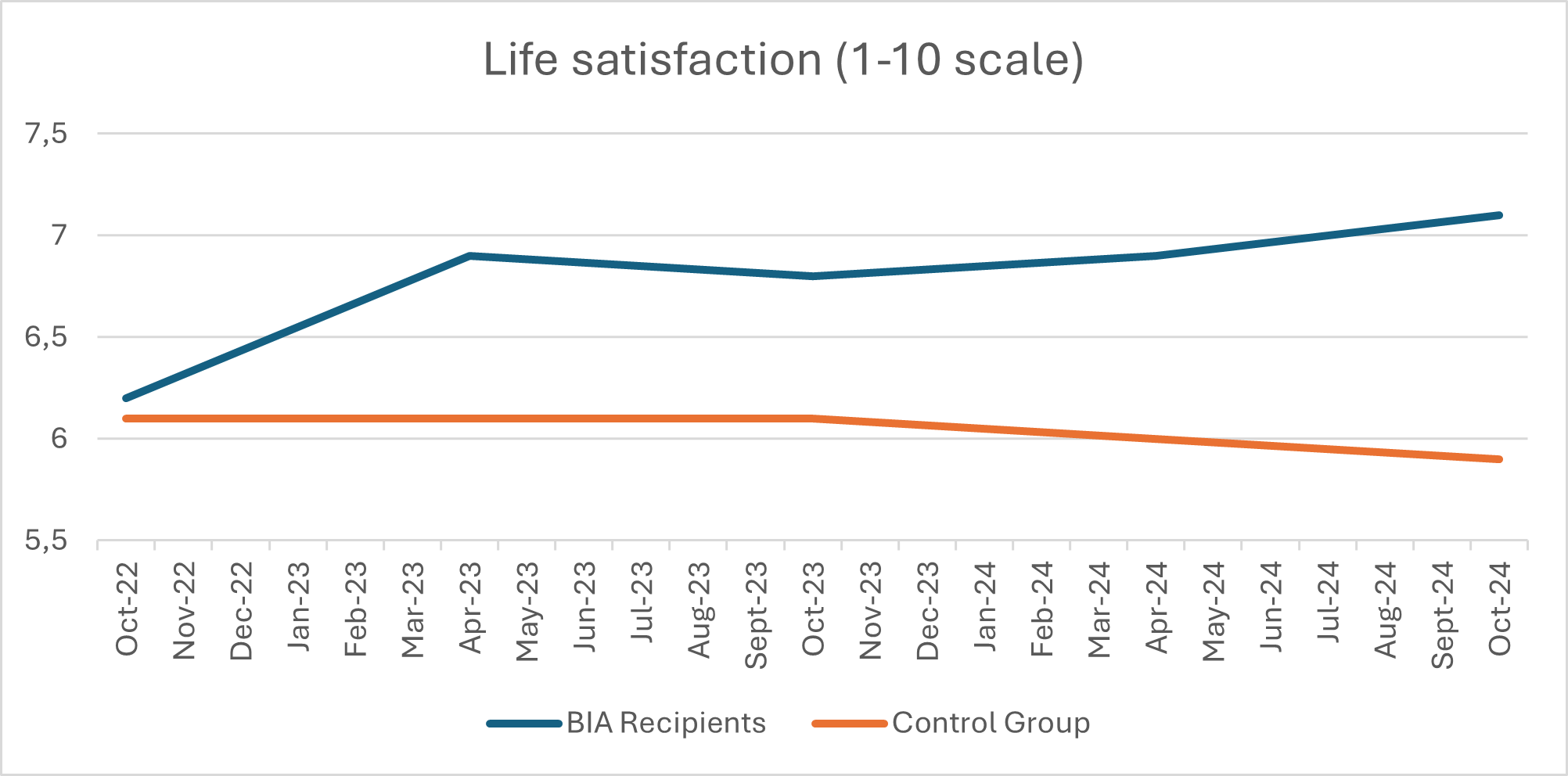
Figure 5 Life satisfaction (1-10 scale)
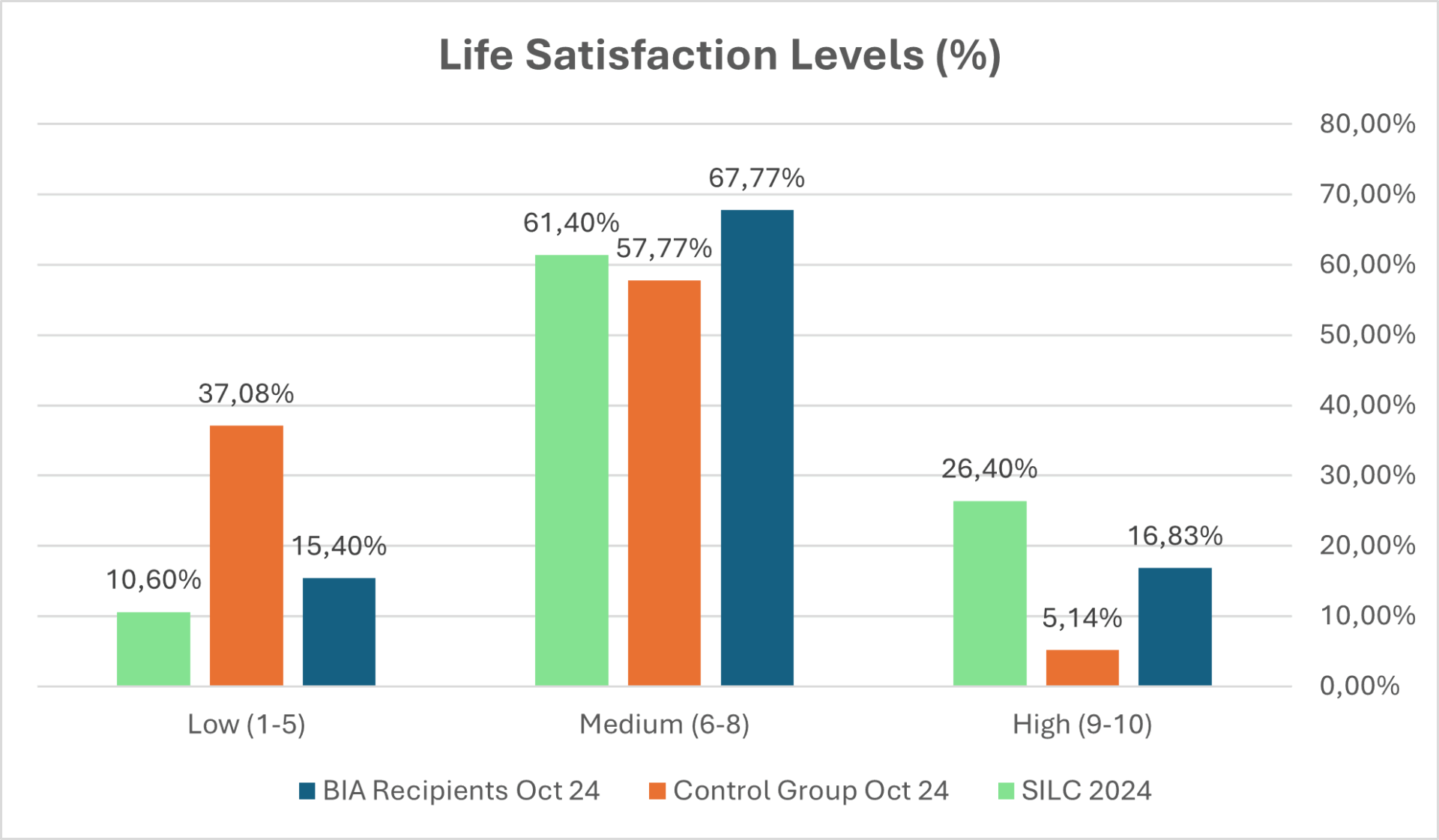
Figure 6 Life Satisfaction Levels (%)
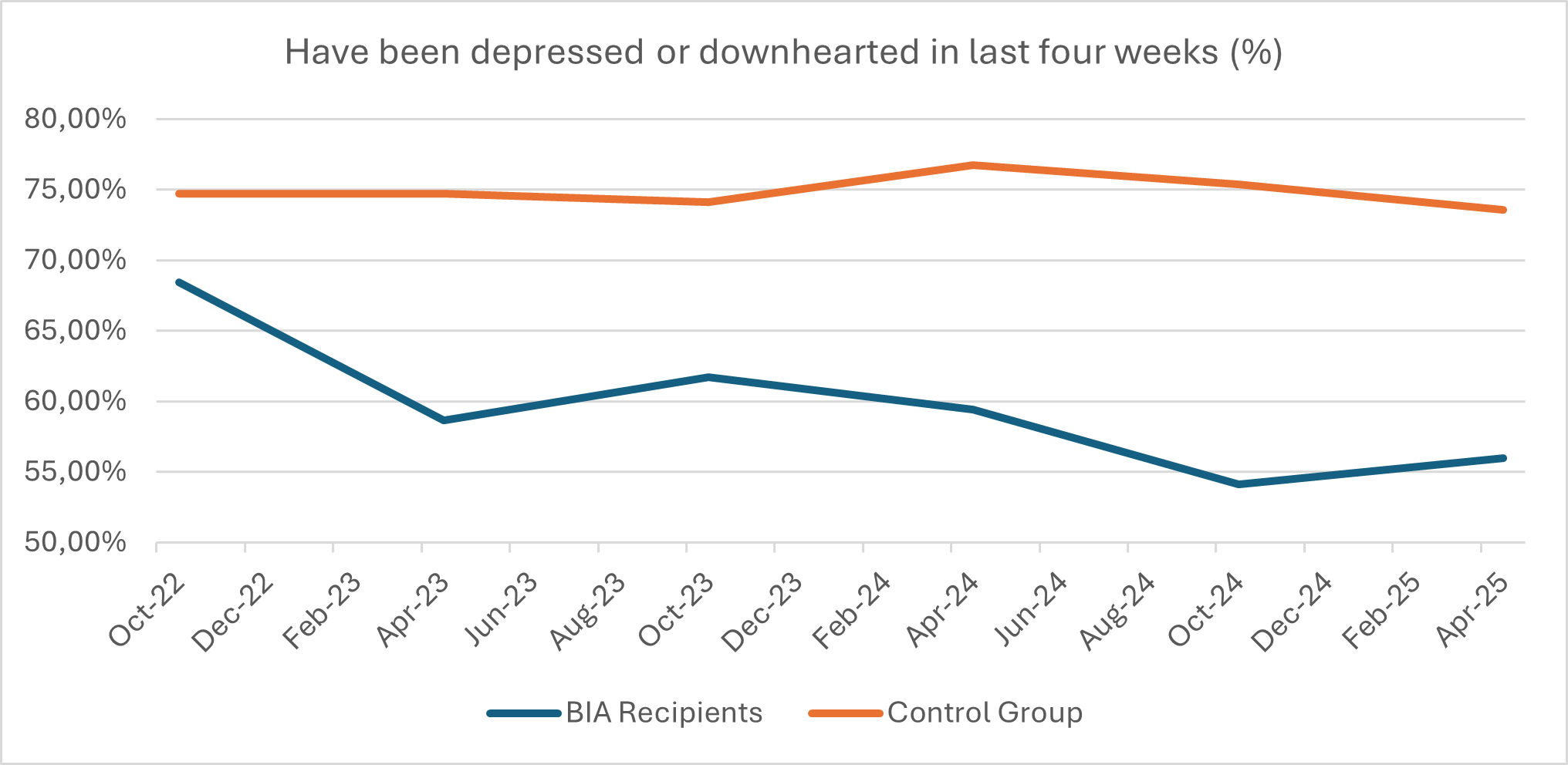
Figure 7 Have been depressed or downhearted in last four weeks (%)
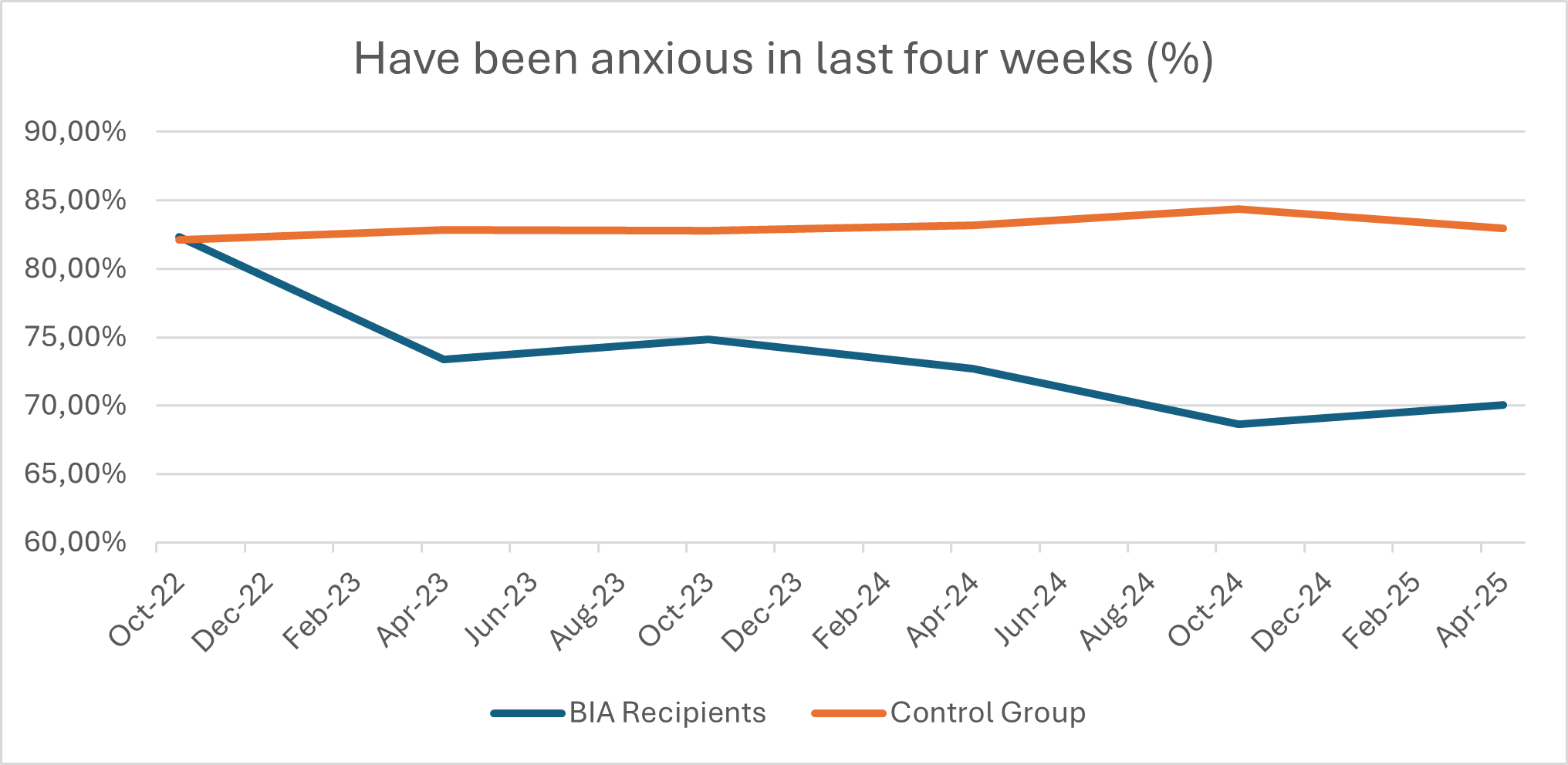
Figure 8 Have been anxious in last four weeks (%)
This highlights an often-overlooked truth, creativity flourishes when individuals feel secure. By reducing anxiety and improving quality of life, the BIA isn’t just supporting art; it is supporting the human beings behind its creation.
Economic and Social Returns
A really significant finding, is the pilots’ cost-benefit analysis. The CBA from ALMA Economics estimates that for every €1 invested in the BIA, society receives about €1.39 back in benefits.
- Net fiscal cost (2021–2025): under €72 million.
- Social and economic benefits: over €100 million.
- Around €80 million of that is attributed to wellbeing gains.
These figures matter because they demonstrate that the BIA is not only a culturally valuable intervention; it is economically justified. By investing in artists, costs are reduced elsewhere, such as health and welfare. Whilst also and strengthens Ireland’s cultural capital.
The Human Story Behind the Numbers
Beyond the statistics, the BIA has changed and improved recipients’ lives. Artists report feeling more confident in pursuing ambitious projects, experimenting with new artforms and taking creative risks, they would never have dared before. Some recipients, in a qualitative report from Dr Jenny Dagg; speak of finally being able to afford proper materials, others mention reclaiming the mental space to write, compose, or paint without constant background financial stress.
There is also a collective effect: by keeping more artists active, the scheme enriches Ireland’s cultural ecosystem. Festivals, galleries, theatres, and music venues all benefit from a stronger supply of work. Communities benefit from outreach, workshops, and cultural participation.
Conclusion
Two years into the Basic Income for the Arts pilot, the evidence is compelling. Recipient artists are creating more work, investing more in their practice, staying in the sector and living healthier, happier lives. Ireland’s BIA experiment shows the intervention is having a positive impact on recipients. It is giving artists time, stability, and dignity, while delivering real social and economic returns.